

Category: Canopy Skills/Landing
Saving your life with a parachute is great fun… here are articles on how to do it better, safer, and smoother.
-
Parachute Landing Patterns Explained
Have you ever struggled to understand what a parachute landing pattern is and how to modify it for different wind conditions? Check out this video! (Another fantastic edit by Nick Lott!)
-
Turbulence and Skydiving: What You Don’t See Can Kill You
Air turbulence can partially or completely collapse a skydiver’s canopy, causing injury or worse. Avoid it at all costs!
-
Skydiving Airmanship Part 1: Knowledge
“Airmanship is the consistent use of good judgment and well-developed skills to accomplish flight objectives. This consistency is founded on a cornerstone of uncompromising flight discipline and is developed through systematic skill acquisition and proficiency. A high state of situational awareness completes the airmanship picture and is obtained through knowledge of one’s self, aircraft, environment, team and risk.” ‑‑http://www.skybrary.aero/index.php/Airmanship Airmanship is a trait that we as skydivers should aspire to master,…
-
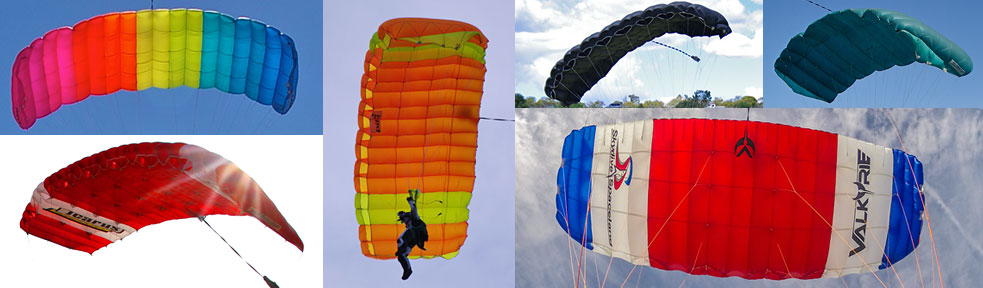
Good Canopies, Bad Decisions
So you are ready to get that shiny new wing, or sell your current canopy. Well caveat emptor[1], good readers. Are you making good decisions about this purchase, or the sale of your “old” wing? We are seeing a disturbing, fatal trend among skydivers worldwide as newer, faster wings come onto the market and older wings become perceived as less high-performance. To help combat this, we all need to examine…
-
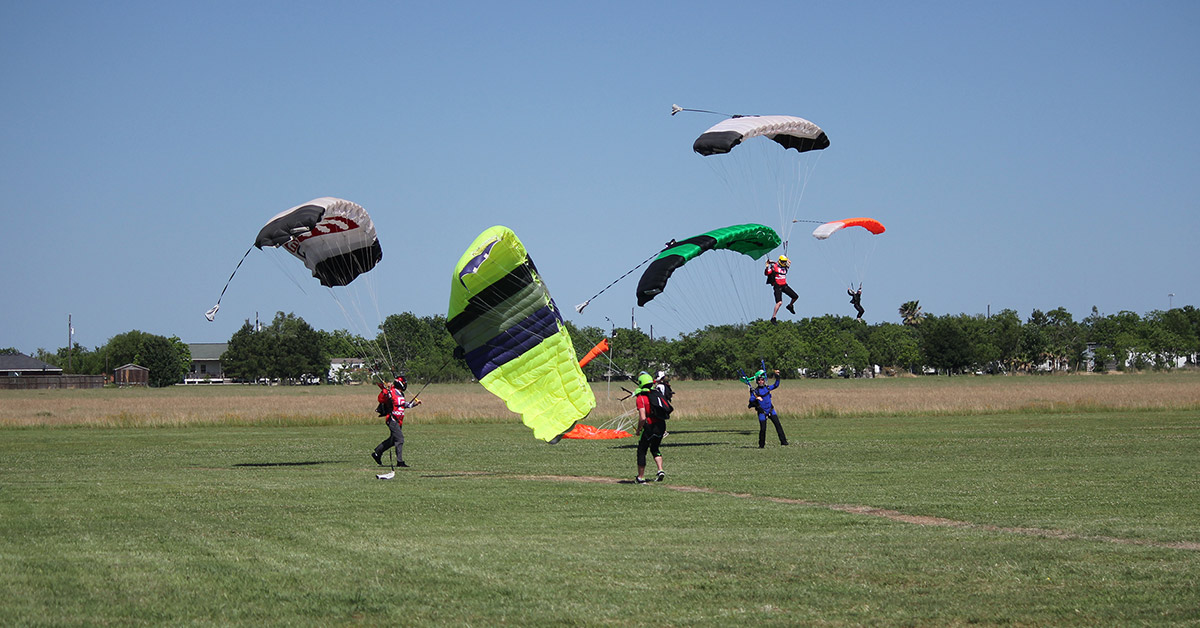
Spaceland Landing Area Policies: A Time and Place for Everything
Updated 2021 We all know that Skydive Spaceland is a world-class dropzone with excellent facilities and aircraft. What you may not know is that when we opened our doors in early 2000, Spaceland was conducting about 5000 skydives per year. Now, 15 years later, our air traffic has increased by about 20 times; we’re up to around 100,000 skydives per year. With this increase, the risk of a canopy collision…
-
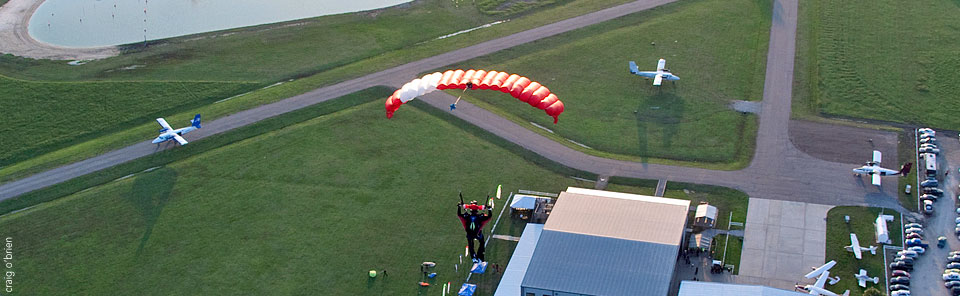
Canopy Traffic: Find Your Place in the Sky
Traffic is a bad word, especially for those of us living in the Houston area! And while we think we can get away from it when we’re flying, the reality is that at any dropzone, and particularly at a busy one like Spaceland, the traffic can resemble downtown Houston rush at its worst. The difference is that if we don’t like what’s ahead of us, we can’t just stop and…
-
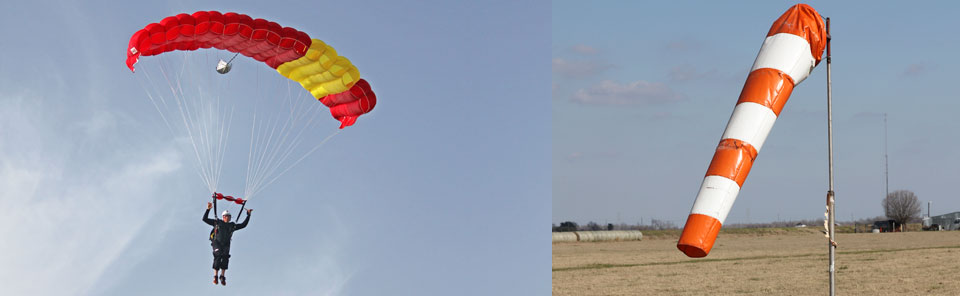
What’s Your Wind Limit?
Gusty winds are common at Spaceland and many other dropzones. As an experienced jumper, I have thought a lot about what my personal wind limit is–in other words, when I will sit down even though the dropzone is not on a wind hold. Recently, I made the decision not to jump after watching other fun jumpers and tandems land. Later in the day, the tandems went on a wind hold.…
-
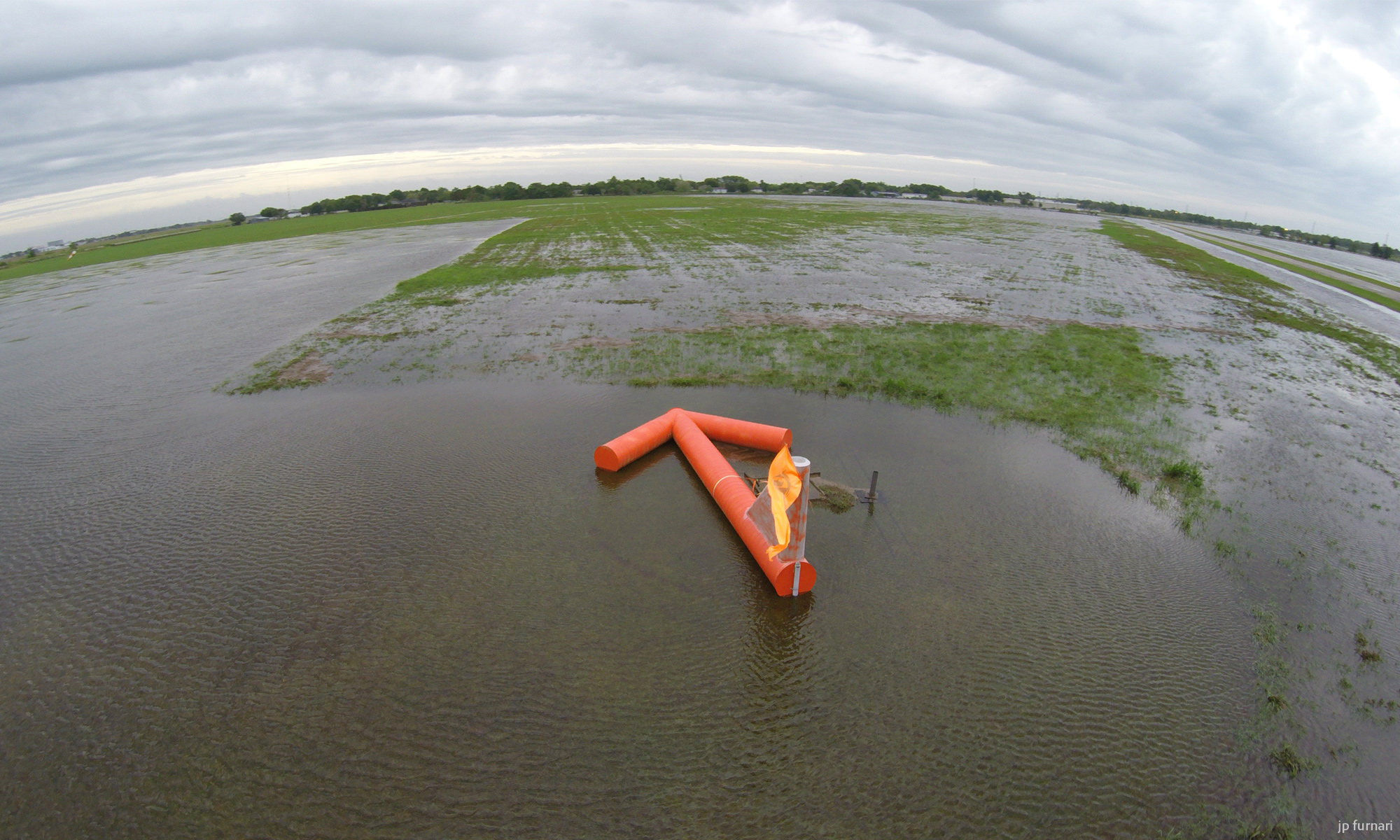
Splish-Splash: Landing in Wet Conditions
Ah spring… Green grass, warming temperatures, and RAIN! One of the most common questions we see in our social media news feeds this time of the year is, “How wet is the landing area?” If you have to ask, the answer is usually “underwater.” 😉 Since we’re not too interested in waiting days for perfectly dry ground to skydive, that means we have at least a fair chance of landing…
-
Landing/Canopy Safety
Canopy Safety Wind indicators: Landing direction arrow, flags, wind sock. The landing direction arrow is an air-traffic control device that sets the landing direction on the north side of the runway. Know the landing direction before takeoff, and check the landing direction indicator (LDI) north of the runway after you open and check canopy in case winds have changed. Follow the landing direction indicator when landing north of the runway. No…
-
Avoiding Turbulence
It is bumpy up there! Turbulence is the Rodney Dangerfield of skydiving…. It doesn’t get respect. Turbulence is a challenge for jumpers for at least two reasons: It is invisible and unpredictable. Because turbulence is invisible, we must actively anticipate where it may be. Most new jumpers (and a lot of more experienced ones) vastly underestimate the danger zone for mechanical turbulence around obstacles. We can expect turbulence in front of,…
-
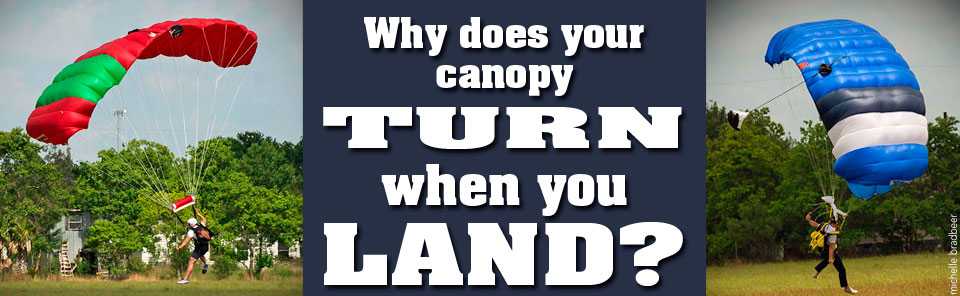
Does Your Canopy Turn When You Land?
Does your canopy turn when you land? The most common cause of this is when the pilot looks to one side instead of straight ahead, creating a chain effect. We tend to go where we look. As you enter your flare, if you look down and in either direction, your body will want to go that direction. Try standing in front of a mirror and hold your hands at chest level a few…
-
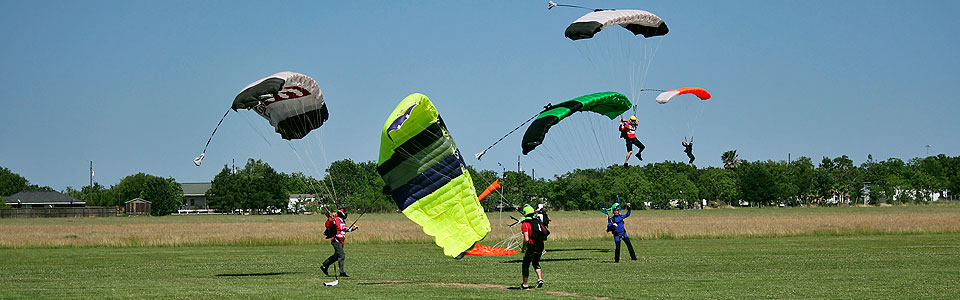
Landing Areas: Divide and Conquer
Please note: This article was updated on October 1, 2015. You know how the first time you came to a busy drop zone, it seemed like all the parachutes were flying randomly around the sky? But now that we are skydivers and understand flight plans, we see some degree, at least, of order in the chaos. We’d like to further increase the amount of order in our canopy flight traffic…
-
You’re the Pilot: Take Control!
Ask any group of non-skydivers what they think would be the scariest part of skydiving, and at least a few will answer, “The landing.” Ask a group of skydiving students, or even experienced jumpers, and you’ll get the same answer from a few of them. We have the guts to throw ourselves out of airplanes in flight, yet we’re sometimes scared of piloting the assembly of nylon and string that saves…
-
Parachute Dirt Diving
We dirt dive the freefall portion of nearly all of our skydives, but do you dirt dive your landings? Do you check the wind speed and direction at all altitudes, which way the wind will shift as you descend, etc.? If the wind direction changes, how will that change your landing pattern? As we develop more experience this becomes almost automatic, but initially we have to think about all of…
-
Landing Patterns and Winds
One of the best things about skydiving today compared to some decades past is that we jump steerable parachutes. We have the ability to change our flight paths and land on target, which makes it a lot easier for us to land near the hangar and make lots of jumps in a day without quite the cardio workout of walking in from far-flung fields. These steerable parachutes also make it…
-
The New Beer Line
Ah, the beer line–that line close to the hangar that causes all skydivers in sight distance to yell “BEER!!!!” with glee if you land on the hangar side of it. Did you know we now have one of these in the student/A-B license landing area at our Houston location in addition to our regular beer line? Let me explain. You might have noticed that we have a reference line mowed/burned…
-
Skydiver Training Tip: To Land Off or Not?
Scenario: You’re under a good canopy at 2000 feet. You are downwind of the drop zone and aren’t sure you can make it to the landing area. Between you and the drop zone are trees, brush, power lines, and likely all manner of unpleasant critters. Behind you is a wide open field. What do you do? a) Get on your rear risers or toggles, trim out your canopy for a…
-
Landing Area: New Reference Line
Have you ever landed your parachute just a little closer to an obstacle than you would have liked? Of course you have. All of us do as we begin to learn how to skydive and fly parachutes. So how do we NOT land too close to or on top of obstacles? We need to understand a number of things… what kind of performance our chosen parachutes provide, how that performance…
-
Parachute Landing Patterns
Wind conditions anywhere can be extremely inconsistent… from 30mph to dead calm conditions, it’s important that we have a consistent canopy landing pattern plan that keeps everyone safe. Following are several guidelines we follow here at Skydive Spaceland to keep traffic moving consistently and predictably, thereby reducing the chances for a collision. Take heed of the notes below… All canopy pilots are gliders; we have no engines to go-around and…